The electric vehicle questions your employees are asking
With electric vehicles (EVs) now a common sight on UK roads, more businesses are offering them through salary sacrifice schemes.
If you’re considering joining them, here are the answers to the questions employees ask most - so you’re always ready for those ‘quick question’ moments.
- Are EVs cheaper to run than a petrol or diesel car? Yes – one of the main reasons people opt for an EV is their lower fuel and maintenance costs. Plus, if you’re driving one via salary sacrifice, EVs have much lower benefit-in-kind rates than petrol or diesel cars – making them kind on the wallet as well as the planet.
- What are the different ways to charge an EV? There are three ways to charge an electric car: home charging, via public chargers, or at destination chargers. Most people usually charge overnight so they tap into the cheaper overnight tariffs and start their day with enough charge. Public chargers are handy for when you’re travelling longer distances or away from home. Destination chargers can be found at locations such as hotels, offices, and tourist attractions.
- How do I manage my battery when driving an EV? Just like a fuel gauge on a petrol or diesel car, you can monitor your battery level during your drive to ensure you always have enough power. It’s worth noting that an EV won’t cut out like a phone dying. Even at zero, you’ll have a few miles of wriggle room to reach a charger or pull over safely and contact breakdown services.
- How many public EV chargers are there? The UK by June 2026 has more than 121,000 public EV chargers available across 46,664 locations, so a charging break won’t derail your summer road trip.
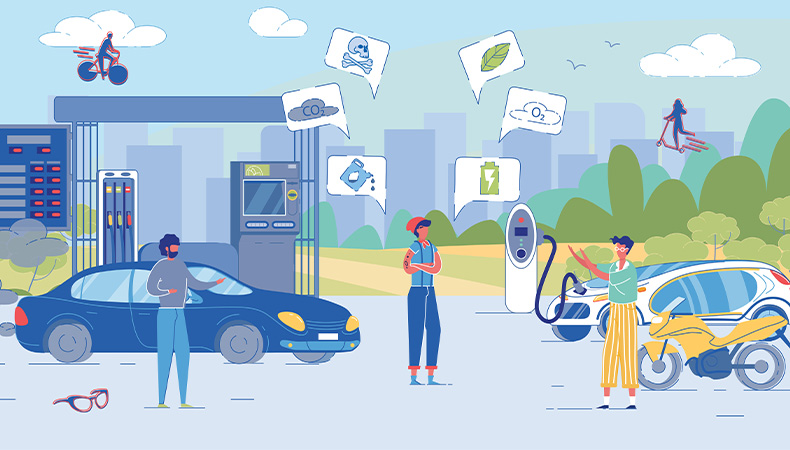
- Are EVs actually better for the planet? Although the manufacturing of EV batteries does create more emissions than building a petrol or diesel vehicle, these emissions are offset by the fact that EVs create no emissions out on the road. On average, an EV’s lifetime emissions work out at 68% lower than a petrol car’s.
- Are EVs suitable for daily commuting? Absolutely – the average UK driver commute to work is under 30 minutes and modern EVs can handle hundreds of miles on a single charge, meaning most people only need to charge once or twice a week.
- Are EVs more likely to catch fire than petrol or diesel cars? You may have seen news stories about EVs catching fire, but the reality is that fires are less common in EVs than the petrol and diesel cars we regularly fill with an extremely flammable liquid. According to EV FireSafe, there’s a 0.0012% chance of a fire in an EV, compared to 0.1% in a petrol or diesel car.
Supplied by REBA Associate Member, Zenith Vehicles
Headquartered in Leeds, Zenith has been a leader in salary sacrifice car schemes for over 25 years.