4 ways AI is reshaping benefits to deliver a hyper-personalised offering
Most benefits platforms these days offer too much. In an effort to make them as inclusive and personalised as possible, providers have packed them with information, products and services. The result is a lot of noise that's overwhelming to navigate.
But the employee benefits industry is at a turning point. As AI adoption grows, providers have an opportunity to move beyond traditional personalisation and towards hyper-personalisation: real-time experiences tailored to each individual.
Here are four ways AI is reshaping the benefits industry:
1. Finding the right benefit at the right time
Right now, it’s up to the employee to find benefits that are relevant and meaningful to them from their employer’s offering. But this creates a few hurdles.
First, how do you know exactly what you need, the moment you need it? And second, that approach leaves room for decision fatigue, often leading employees to give up the search or stop engaging with the platform altogether.
In this instance, AI can act as a curator of content, prioritising the benefits most likely to resonate with each user, wherever they are.
Using an individual’s data, such as platform behaviour, demographics and job role, to infer what might be most relevant to them and surface the appropriate benefits is more than simply adopting a modern approach.
It represents a shift from searching for content to receiving it unprompted, reducing mental effort while increasing relevance.
2. Reaching every employee, wherever they work
Hyper-personalisation is meaningless if the benefit never reaches the person it's intended for. Frontline and deskless workers are at the heart of this challenge.
Around 80% of the global workforce are in deskless roles and, unlike their office-based counterparts, they’re constantly on the move, working across different locations and often relying on little more than their mobile phone to stay connected.
In traditional benefits models, these employees are most likely to miss key updates and notifications about their benefits, and many may not even know they have access to a benefits platform at all.
One of the crucial elements to get right when it comes to delivering benefits to a deskless workforce is timing, and AI is the catalyst that helps solve this problem. Let’s say the ideal time for a frontline worker to check their employee benefits is during a short break, at the end of a shift or on the commute home. AI tools can capture that information and use those moments as optimal engagement windows, delivering relevant content when employees are most likely to see it and act on it.
3. Helping managers recognise their people consistently
Our recent study showed that 74% of managers said they face real, structural barriers to recognising their teams. As a result, workplace recognition can be inconsistent, which can have a negative effect on company culture, especially for deskless employees who already receive less recognition than their office-based counterparts.
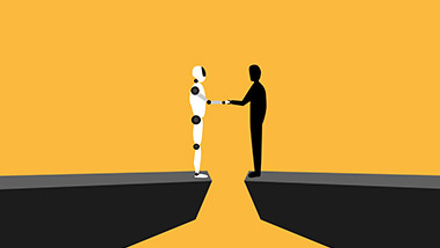
AI can be used as a tool to support managers and coach them into recognising their teams regularly and meaningfully. For individuals who have a lot on their plates as it is, AI has the power to lighten that load. However, the vital thing to remember is that while AI can support recognition, it cannot replace the genuine human connection behind meaningful moments of appreciation. And it absolutely shouldn’t.
Used in this way, AI helps lighten managers’ workloads while ensuring fewer recognition opportunities are missed. The recognition itself still comes from the manager, preserving the authenticity and human connection that make it meaningful in the first place.
4. Giving HR insights to help prove their offering’s ROI
One of the final ways AI is reshaping benefits platforms is by helping HR teams make more informed decisions about their benefits offering. AI can analyse platform usage at scale, identifying what’s popular, what’s underused, which benefits resonate with different employee groups, and how much it all costs.
But HR doesn’t need another dashboard. What they need is to know what to change.
As HR budgets are stretched further and further, teams are expected to do more with less. That includes proving the ROI of their benefits offering to the C-suite and finance leaders. AI helps by turning complex data into clear, actionable insights, helping HR make smarter decisions with greater confidence.
Final thoughts
We're living through a period of rapid AI development, and the employee benefits industry has a real opportunity to put that technology to good use. Used responsibly, transparently and with employee consent, AI can help employees be presented with benefits that matter to them, support managers in recognising their people consistently and give HR teams the insights they need to improve or defend their offering.
Importantly, AI isn't about replacing people. It's about supporting them. AI can become a co-worker, like a manager of relevance, that can ensure that the employee experience is hyper-personalised, without adding more noise. But while this is valuable in theory, it cannot happen without an element of hyper-transparency in practice.
Supplied by REBA Associate Member, Boostworks
We’re the people that help people thrive.