5 ways to deliver whole-of-workforce health
Employees increasingly expect a consumer-like experience from their health and wellbeing benefits, with fast, personalised and on-demand care. As a result, businesses are being pushed to rethink which healthcare benefits they offer, and to who, without further skyrocketing costs.
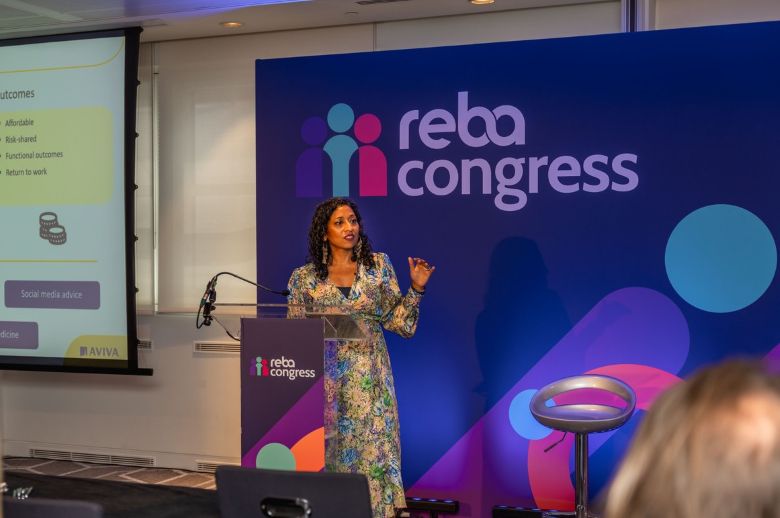
At REBA Congress 2026, speakers and participants shared strategies to work towards this whole-of-workforce healthcare model. Here are REBA’s top five takeaways:
1. Clear healthcare pathways
The need for clear healthcare pathways was a constant discussion throughout REBA Congress. Speakers outlined how employees need to be able to easily navigate health benefits through greater integration and the use of digital tools.
To address the ongoing need for better benefits communication and navigation, employers require clearer tools.
For example, creating a single ‘front door’ digital access point can provide employees with seamless pathways to the appropriate providers, options, and information.
Dr Suba M, medical director at Aviva, suggested identifying workplace ‘cultural architects.’
She explained that these employees act as ambassadors, communicating key updates about healthcare benefits and advocating for healthy lifestyles to drive engagement across the company.
2. Out-of-hours, digital-first availability
Dr Suba M noted that, according to OpenAI, seven in 10 health-related conversations on ChatGPT occur outside normal clinic hours, so healthcare benefits need to be more flexible.
She added that traditional nine-to-five opening hours don’t necessarily suit the consumer-led, always-on experience and suggested that consumers want flexible, digital-first access.
REBA’s annual Health and Wellbeing Research demonstrates the huge growth in the past six years of the use of online-GP services, which can easily be provided to the whole of workforce.
In 2020, just 36% of respondents offered this benefit. In this year’s research, 88% provide online GP services.
3. PMI is adapting
Private medical insurance (PMI) is a core benefit at many organisations. Although traditionally only available to senior staff, this is now changing.
Throughout REBA Congress, there were discussions about how current schemes are being adjusted to be more cost-conscious, enabling the inclusion of more of the workforce in PMI schemes.
Suggestions included changing plans to increase the excess or to include a 100% or other-amount stop-loss.
However, instead of amending existing plans, organisations can also review the market to determine which types of PMI plans and products may be suitable for their workforce.
For example, Equipsme’s PMI-lite plans are expanding health insurance access for more employees, making workforce-wide coverage more cost-effective and accessible. Members can also add family members and can upgrade to add more services.
At Vitality, scheme members can engage in health education and prevention activities by registering for a wellbeing webinar or workshop hosted by Vitality Coaches, or they can book a Healthcheck Day, which includes biometric screening.
4. Healthcare trusts
With limitations of traditional PMI models, there may be a need for more flexible funding solutions.
Delegates discussed the advantages of introducing a health trust to fund corporate healthcare.
This approach allows a central trust to manage claims and healthcare spending, providing employers with greater flexibility to tailor offerings to their workforce.
5. Health cash plans
Health cash plans are a cost-effective way to encourage preventative health, such as eye tests and dental check-ups, for the whole workforce.
Cash plans can also be used to complement other health benefits, for example, by paying the excess on a PMI claim.
However, delegates at REBA Congress were warned to use cash-plan data to understand their workforce's needs.
Data from the plans can highlight how employees are using healthcare benefits, how many are using them, and where common trends lie to support a broader workforce health strategy.
By gaining greater knowledge of the working population and existing health trends, it may be easier to predict future health concerns and offer effective solutions to address them.