What the AI agent revolution means for the future of work
Artificial intelligence (AI) agents are set to outnumber humans across workforces, revolutionising the way organisations operate.
Agentic AI refers to systems that can set or interpret goals, plan multi-step actions, use external tools, and execute tasks autonomously or semi-autonomously with minimal human oversight.
Unlike standard generative AI that mainly responds to single prompts with text or media, agentic AI acts purposefully to complete workflows and adapt to changing feedback.
Agents are already taking over more of the mundane and administrative tasks across businesses, freeing up humans to focus on mission critical pursuits such as identifying problems, developing solutions, building relationships and overseeing the quality and ethics of AI-generated work.
McKinsey’s 2026 State of AI report finds nearly nine in 10 organisations surveyed report regular use of AI in at least one business function, but more businesses are moving from isolated deployments to enterprise-scale adoption. Almost half (44%) report that AI is scaling across their enterprise, up from 38% a year ago. Furthermore, 80% of respondents report that AI has improved their individual productivity, and 50% say AI helps them make better decisions.
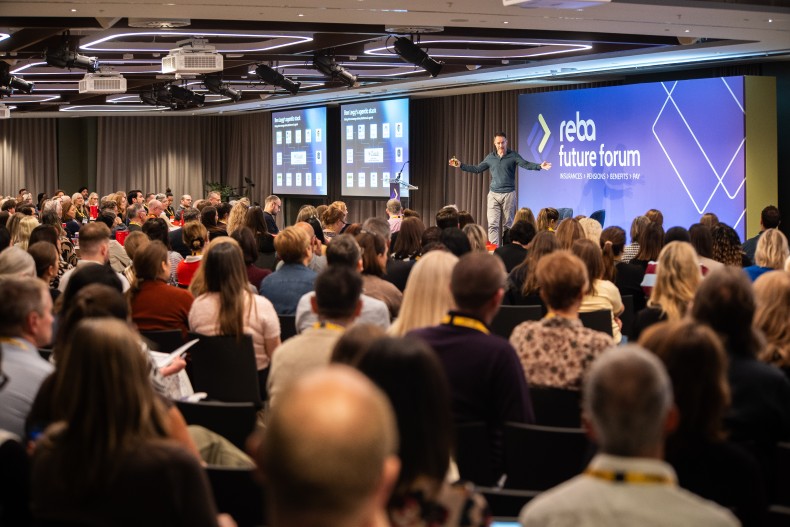
Ben Legg, CEO of Digital People and former COO of Google Europe, told delegates at the REBA Future Forum 2026, that AI agents are not here to steal jobs, rather to improve productivity.
"The biggest disruption from AI isn't about mass job loss. Will AI create mass unemployment? My answer is almost certainly not. Jobs will get destroyed with AI doing the boring stuff while humans will move on to basically solving more interesting problems. Agentic AI is coming, and it's coming fast.”
However to become a truly successful agentic organisation, oversight and governance must be a primary focus.
“It's about the entire architecture of work. In a world where the machine does the work, who designs the machine? Who builds the machine? Who checks the machine? It's us," Legg said.
And Legg warned that “AI will go wrong”, noting that humans need to ask whether the inputs and outputs good, and if the work undertaken by agents is ethical, high quality and efficient.
Effective AI governance structures should be neither too strict not too lax, Legg said, advising that of all the “blow-ups” he has seen as a result of agentic AI arose at companies that had either excessive or limited oversight.
“Companies do need to think [their AI strategy] through. Ask how people will become more productive or more creative and, how do we make sure the company benefits?”
Supplied by REBA Associate Member, REBA
Supporting the reward and benefits community to pursue best practice and drive excellence in their strategies