How employers are re-engineering work culture to tackle mental health and burnout

Employers are reaching a turning point on mental health.
Mental health has long been a key risk. Findings from REBA’s Health and Wellbeing Research 2026, together with AXA Health, show reward teams are moving past surface-level wellbeing initiatives toward high-impact, evidence-based strategies aimed at building genuine workforce resilience.
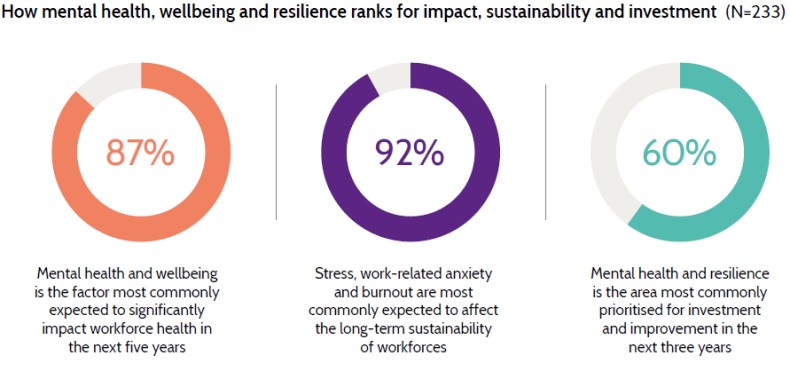
Nine out of ten employers (92%) identify stress, anxiety, and burnout as the single biggest threat to long-term workforce stability, ranking it well ahead of musculoskeletal issues (67%) and cancer (54%).
Workforce sustainability is essential for an organisation to maintain a healthy, engaged and productive workforce over the long term. It means ensuring that employee health does not become a barrier to performance, retention or organisational effectiveness.
This sustainability is impossible without addressing the root causes of workplace stress. Employers can no longer rely on reactive support schemes; they must re-engineer work culture, management practices, and preventative strategy to protect performance and retention.
The Health Foundation’s Mental Health Trends Among Working-Age People (2025) reports that poor mental health is on the rise across all age groups, although the most alarming surge is among 16- to 34-year-olds, where mental health conditions have more than doubled over the past decade.
There are complex and multifaceted drivers behind this trend. These range from higher reporting rates as awareness increases and stigma reduces, through to financial pressures, record-breaking NHS waiting lists, and social and lifestyle factors.
There is also a clear link between work and mental health. HSE statistics report that in 2024-25, 964,000 workers suffered from work-related stress, depression or anxiety, resulting in more than 22 million lost working days. Excessive workloads, pressure and management styles are most commonly to blame for stress-related absence, according to the CIPD’s Health and Wellbeing at Work Survey Report (2025).
Despite ongoing investment in mental health support, the prevalence of poor mental health in the workplace continues to grow. Employers are now looking to review their current approach to ensure it is delivering value and meaningful, lasting change to employees’ mental health.
Change is on the horizon
Employers have invested heavily in reducing mental health stigma and expanding support, yet the prevalence of poor mental health continues to increase. These forces are now pushing employers to shift gear.
The top priority for health and wellbeing investment for the next three years is mental health, with 60% of respondent employers prioritising it for investment and improvement.
Central to this is establishing a workplace culture for effective health and wellbeing support.
Just over half of employers (51%) cite building a culture of health, wellbeing, and trust as a priority for embedding preventative action into strategy.
A healthy culture has a direct impact on levels of stress, burnout and presenteeism and can be a positive influence on health through beneficial working relationships, open communications, timely support and effective work-life balance.
Employers are also striving to take a more proactive and preventative approach. REBA’s Health and Wellbeing Research 2026 by increasing workplace health champions or mental health allies, and line manager training. More practical actions include offering mental health assessments.
To find out more about how mental health is evolving in the workplace, download REBA’s Health and Wellbeing Research 2026.
Supplied by REBA Associate Member, REBA
Supporting the reward and benefits community to pursue best practice and drive excellence in their strategies