Pay transparency is a cultural shift, not a compliance exercise

Globally, new regulations (including the EU Pay Transparency Directive and expanding pay transparency laws across multiple US states) are accelerating a broader societal shift in expectations.
Employees, candidates, and the wider public increasingly expect openness, fairness, and accountability from employers. In this context, pay transparency is not simply regulatory noise or a logistical requirement. It represents a fundamental change in workplace norms and organisational culture.
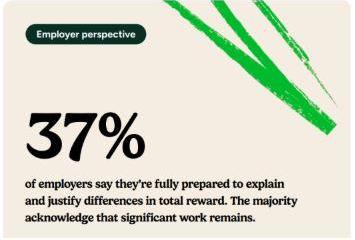
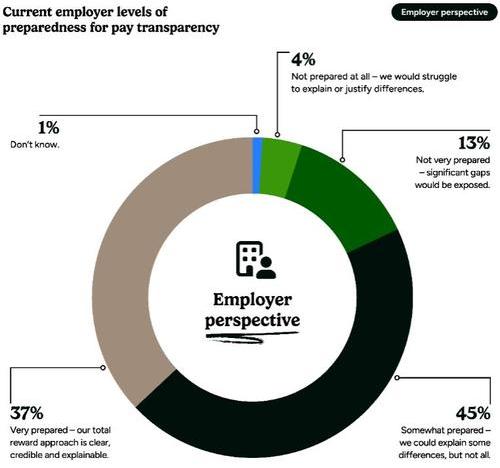
According to research from Benifex, most organisations are acutely aware that they are not yet prepared to make this shift:
The challenge goes beyond compliance readiness. Pay transparency will expose deeper structural issues in how organizations design, govern, and communicate pay and reward.
Historically, many organisations have made pay and reward decisions behind closed doors, with limited transparency into how pay is set, how progression works, or how benefits fit into the overall employee value proposition.
Greater transparency forces organisations to clearly explain these decisions and, in many cases, address inconsistencies or inequities that have existed for years.
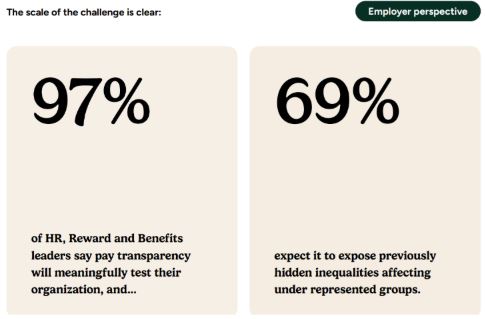
The scale of the challenge is clear
Even in countries with longer standing transparency requirements, confidence remains limited.
Critically, transparency introduces both risk and opportunity. Without clear narratives, accurate data, and well prepared managers, increased openness can trigger confusion, misinterpretation, and what many leaders now recognise as transparency backlash.
As a result, pay transparency must be treated first and foremost as a communications and cultural challenge.
Leaders need to ensure that reward data is accurate, accessible, and presented in a way employees can meaningfully understand.
Managers must be trained to explain pay differences, discuss progression pathways, and confidently signpost employees to the information they are increasingly entitled to see and request. This requires both capability building and cultural alignment, not just policy change.
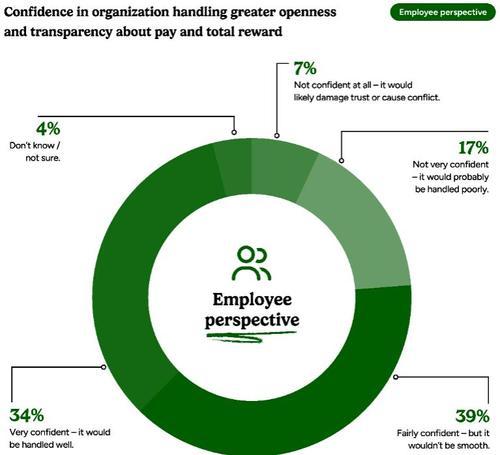
The research report shows that only 34% of employees are confident their employer would handle pay transparency well. And 80% say transparency will only build trust if organisations act on unfairness rather than simply explaining it.
Critical role of TRS in closing this gap
By bringing together pay, benefits, and broader reward elements into a single, personalised view, they help turn complex data into something visible, accurate, and meaningful.
In doing so, they not only support compliance but also actively increase engagement with the full reward proposition, often driving greater awareness of and demand for benefits and wellbeing initiatives.
In many ways, the shift to pay transparency brings together the central themes of this research: visibility, trust, and the strategic use of technology.
Organisations that connect these elements – using modern HR and benefits platforms, supported by AI driven insight - will be far better placed to manage transparency effectively, maintain employee trust, and strengthen engagement in total reward.
Those who treat pay transparency as a narrow regulatory obligation risk learning the hard way that transparency, once introduced, cannot be controlled, only led.
From compliance to culture: what leading employers are doing now
For some organisations, this shift is already underway. Rather than waiting for regulation to dictate their response, reward leaders are using pay transparency as an opportunity to look more broadly at how pay is governed, communicated and understood across the organisation.
At Urenco, for example, the EU Pay Transparency Directive is already prompting conversations well beyond the reward function.
Peter Stack, global head of reward at Urenco, says: “Even at the top level of our business, our remuneration committee and sustainability committee have already started talking about the EU Pay Transparency Directive - because if we don’t get it right, or we have big gaps, they’re going to want to understand why that’s been allowed to happen.”
Importantly, Urenco is also looking beyond the minimum requirements of the legislation. “We’ve already made the decision that, while we won’t have to report in the UK and the US, we’re going to follow the same calculation methodology and apply it on a global basis. It’s about that ripple effect, and that’s almost why we’re starting so early.”
Greater visibility of pay inevitably creates more questions about what employees receive, why they receive it and how their overall package compares. That makes it increasingly important to help employees see the complete value of their reward, rather than salary in isolation.
This has been central to the approach at Ingka Group (IKEA). As Konstantinos Karavidas, group total rewards manager, explains: “Our ambition was that we will be successful as a rewards function if our employees understand the full value of their total reward - not only their base salary, but the totality of what they get by working for us.”
Together, these examples underline why pay transparency cannot be treated as a reporting exercise alone. It has implications for governance, reward strategy, manager capability and employee communication – and organisations that start addressing those connections now will be better placed to build trust as expectations of transparency continue to rise.
Turn reward transparency into greater trust and value
Pay transparency is just one of the forces reshaping the role of reward and benefits. As employee expectations rise and organisations face growing pressure to demonstrate impact, reward leaders need to make the value of their programmes more visible - to employees and to the wider business.
Benifex’s Energizing Reward and Benefits report explores the pressures transforming the profession and how leading organisations are responding, with research and insights to help reward leaders strengthen engagement, demonstrate business value and build the case for continued investment.
Download the Energizing Reward and Benefits report.
Supplied by REBA Associate Member, Benifex
The home of award-winning employee benefits, reward, recognition, & communications.