
You don’t have to know your employees’ stories to offer them support

A common concern for HR and reward leaders is a practical one: how do you communicate around life moments if you don’t actually know what life moments employees are experiencing?
Unlike age or job level, life moments aren’t always visible, according to research from Benifex. Employees don’t formally declare when they’re struggling financially, caring for a relative, training for a marathon, or quietly planning for the future. This uncertainty often pushes employers back toward generational or demographic shortcuts.
But effective life-moment communication doesn’t rely on perfect knowledge. Instead, it’s built around discovery, creating an environment where employees can recognise themselves and self-select the support that fits.
Seek inspiration from your employees
When planning a campaign around life moments, it can be difficult to move beyond familiar assumptions. One way to do this is by looking for patterns in the stories already circulating across your organisation.
People managers, employee groups, and internal communications or engagement teams often surface real life experiences that reveal where people need flexibility, reassurance, or support, without requiring anyone to disclose personal circumstances.
For example, a people manager might share how they’ve supported an employee to work more flexibly while their partner undergoes cancer treatment. That story doesn’t need to be retold in detail to be useful. Instead, it can inform a broader life moment around caring responsibilities, helping others recognise their own situation and explore relevant support.
Inclusivity and diversity are central to this approach. By focusing on themes rather than stereotypes, life moment communication creates space for multiple interpretations, ensuring people can see themselves reflected without being defined by a single narrative.
Shift from targeting people to surfacing possibilities
The goal of life-moment communication is to make support visible at the right time.
A life-moment approach asks:
- What situations might our employees be facing right now?
- What support would help in those moments?
- How can we make that support easy to find, understand, and act on?
This means framing communication around situations and needs, not identities. For example:
- If you’re feeling stretched by rising costs
- If you’re planning for the future
- If taking care of someone else is a priority right now
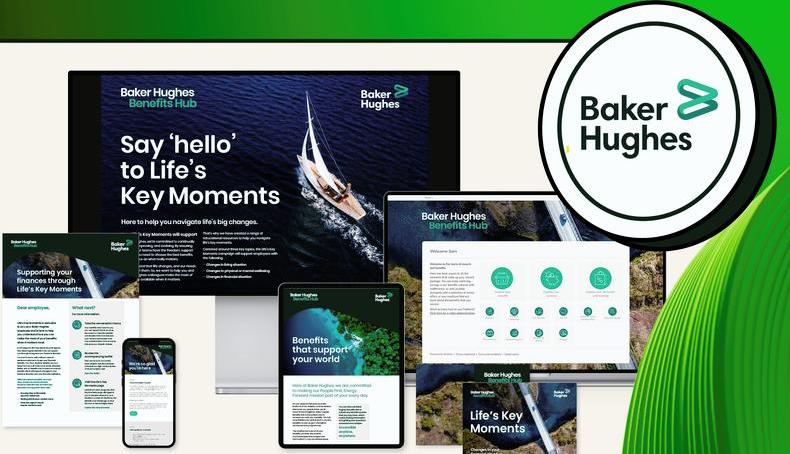
Life’s Key Moments communications campaign that Benifex worked on with Baker Hughes.
Use storytelling to help employees self-identify
People are far more likely to engage when they see themselves reflected in a story. Life-moment communication works best when it uses:
- Diverse scenarios
- Human language
- Relatable experiences
For example, a story about financial wellbeing framed around managing unexpected expenses can resonate with a graduate, a parent or someone approaching retirement – all without ever referencing age.
This approach removes assumptions while increasing relevance.
Go beyond benefits
Taking this holistic approach to supporting employees through their life moments helps people feel more connected and brings your employee value proposition to life. It presents your total package in the way they understand it; your parental leave policy is as much a benefit to employees as their healthcare cash plan.
Design communication that’s not moment dependent
Life events don’t align neatly with annual enrolment windows. That’s why communication strategies must factor in ongoing discovery as well as the initial promotion. A great life moments campaign makes support easy to explore year-round, offers simple explanations in the moment of need and uses planned nudges to encourage reengagement out of curiosity, not urgency.
When benefits are communicated as a continuous resource, not a once-a-year decision, employees are far more likely to engage when life changes.
The takeaway for HR leaders
Designing communication around life moments doesn’t require knowing employees’ personal lives. It requires creating conditions for relevance.
When communication is:
- Contextual rather than demographic
- Story-led rather than label-driven
- Guided by behaviour rather than assumptions
Employees can find what they need, when they need it, regardless of age or generation. In doing so, HR moves away from guessing who employees are and toward supporting what they’re experiencing. If communicating around life moments feels like the right direction – you’re not alone.
In Is it time to quit the generation game in employee benefits?, Benifex explores what 3,450 HR leaders and employees told them about generational trends, shifting expectations, and the growing move toward flexibility and personalisation.
Some of the findings may surprise you. Others may validate what you’re already sensing.
Get the report. Explore the full research and see what it means for your strategy.
Supplied by REBA Associate Member, Benifex
The home of award-winning employee benefits, reward, recognition, & communications.