The health tech solutions taking AI to heart
The impact of mental ill-health in the workplace is widely documented, but the day-to-day reality is stark: Onebright’s patient data shows that a mentally unwell employee loses 2 to 3.5 hours of productivity each day.
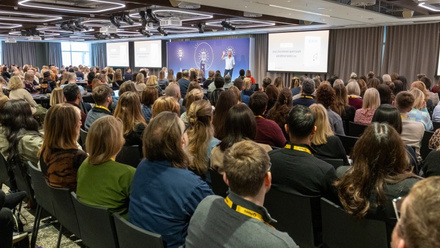
Speaking at the REBA Congress 2026, Shamira Graham, chief commercial officer at Onebright detailed how unchecked employee mental health struggles can quickly spiral.
When compounded by job stress, critical life moments, seniority or taking on caring responsibilities. Deloitte’s figures put the total cost of this at £51billion annually.
“Even healthy people can end up in bad place…and these are eye-wateringly high numbers that we phrase as the hidden cost in your organisations,” said Graham.
For Graham, the solution lies in early, tailored interventions. This means employers need to better understand the operational reality of the organisation, demographic makeup, risk factors, and then personalise support.
Making sense of that data manually, and tailoring support at scale, is a major hurdle. Identifying whether an at-risk group consists of Gen Z employees facing isolation or Gen X workers juggling heavy caring duties requires deep insight.
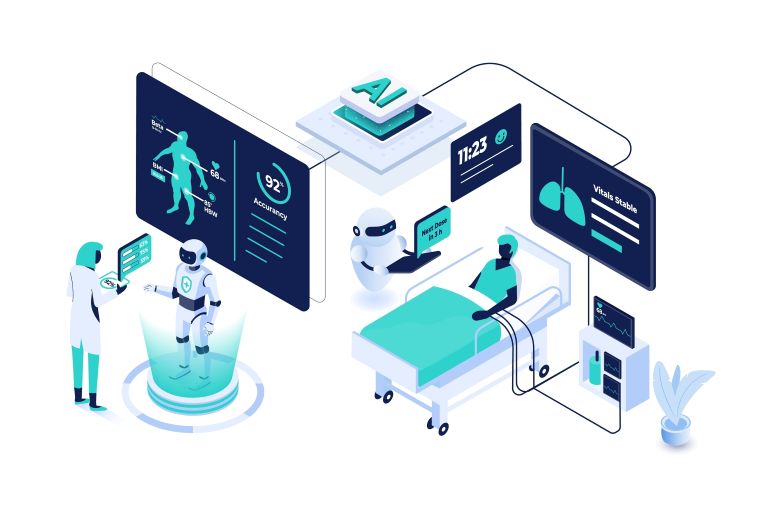
This is precisely where Onebright’s AI healthcare services step in to enable targeted, timely interventions.
With early intervention as a critical driver of positive outcomes, the Onebright platform analyses data to match patients with appropriate intervention, speeding up employee access to care through digital triage, personalising communication.
Graham says it’s driven by the ethos that digital should mean faster and more personalised. “It’s about early intervention and prevention because the business case is absolutely compelling,” says Graham.
AI and better end-to-end support
AI’s impact at REBA Congress extended far beyond mental health.
Derek Salmond, UK director at Sword Health, shared how AI is able to deliver end-to-end support for employees who would otherwise struggle to get access to care for their musculoskeletal (MSK) issues, mitigating the on-average 35 productive days lost to MSK pain.
“We have a lot of downstream costs associated with someone taking time off work [for MSK pain] and we have that dream of catching somebody early,” says Salmond.
With the majority of countries not having immediately accessible face-to-face MSK care, Salmond explained how Sword Health has developed a clinically-trained large language model (LLM).
Via a chat interface, employees can ask questions at any time and receive advice for a manner of issues, such as breathing exercises to help with sleep or physiotherapist-style exercises for MSK rehab before the pain or complex issues get worse.
By combining camera motion-tracking with smartwatch data, the tool delivers real-time feedback on rehab performance. Automated diary and calendar prompts keep employees on track with their exercises- helping prevent minor injuries from becoming major health issues.
“It's a far more accessible solution to traditional models because we're catching people earlier, Then the downstream problems are avoided,” says Salmond, stating the ROI is 1.5x minimum and individuals more likely access care at critical early junctures.
With the AI interface available 24/7 it has the added benefit of meeting employees where they are – even if they work shifts.
Supplied by REBA Associate Member, REBA
Supporting the reward and benefits community to pursue best practice and drive excellence in their strategies