Expert view: How employers can move from mental health reaction to prevention

Many employers now offer employee assistance programmes (EAPs), wellbeing resources, occupational health, private medical insurance and mental health training. This progress matters, but too often support is activated only once there is a visible problem, and at crisis point, support becomes about repair.
Poor mental health often develops gradually, marked by changes in focus, energy, motivation, sleep, confidence, and the ability to cope. According to Mental Health UK's Burnout Report 2026, 91% of UK adults experienced high or extreme levels of pressure or stress in the past year.
Employers need to move beyond viewing mental health support as something that only intervenes when someone is unwell.
Maintaining mental health
Like physical health and safety, mental health should be actively monitored and maintained. The return on investment lies not only in supporting recovery, but in preventing decline and helping people stay well.
When measured, this can translate into tangible gains in both productivity and overall workplace performance, for those at work and those returning from absence.
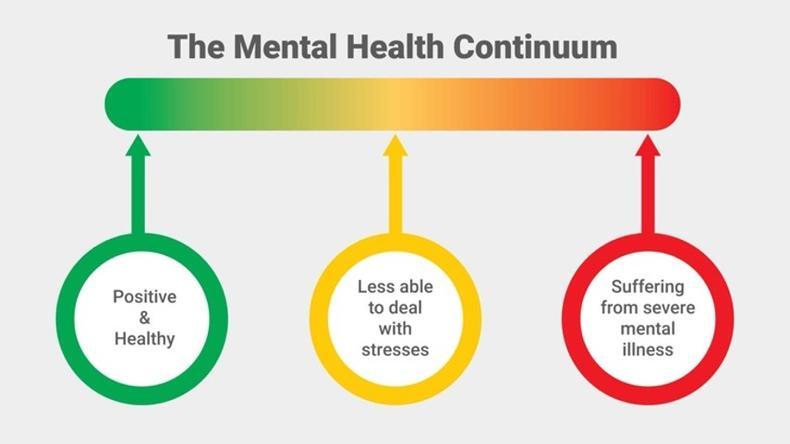
The mental health continuum recognises that mental health is dynamic, not fixed. People move between stages depending on workload, stress, life events, sleep quality, physical health and support.
In the green ‘thriving’ stage, employers should protect wellbeing through manageable workloads, regular communication and supportive management.
The yellow stage is where early signs of strain appear. This may look like someone taking longer to complete tasks, becoming quieter, making more mistakes, losing confidence, avoiding decisions, or seeming withdrawn. Managers should notice change and help employees access support before things escalate.
The need for mental health visibility
Mental Health UK found that one in five UK workers have needed to take time off in the last year due to poor mental health caused by pressure or stress. Among workers aged 18 to 24, this rose to nearly two in five. Absence data matters, but it does not show who is still present and struggling. Presenteeism can appear as reduced focus, slower decision-making and difficulty managing pressure.
Regular check-ins are one of the simplest early interventions, but they need to go beyond operational updates, for example by asking how someone is finding their workload and what would make things more manageable. Over one in three UK adult workers are not comfortable telling their manager or senior leader if they were experiencing high or extreme pressure and stress.
Employers should use data to keep mental health visible. Absence, engagement, workload, employee feedback, occupational health referrals and use of wellbeing services can show where pressure is building.
Support must be visible, simple and confidential. Empathy's 2026 Workplace Benefits Report found that 27% of employees have difficulty understanding what their benefits include, as 23% cite complicated processes, and 23% have difficulty finding or accessing information around services.
The return-on-investment of early intervention is seen in fewer people reaching crisis point, fewer avoidable absences, reduced presenteeism, stronger engagement and better retention. The Empathy report also found that expanded support would make 82% of employees feel their employer truly cares, 81% more likely to stay, and 78% more motivated and engaged.
By focusing on the green and yellow stages, employers can move from reacting to problems to creating workplaces where people are supported to stay well.
Supplied by REBA Associate Member, Onebright
Onebright is a personalised on-demand mental healthcare company.