How to help employees move more during the working day
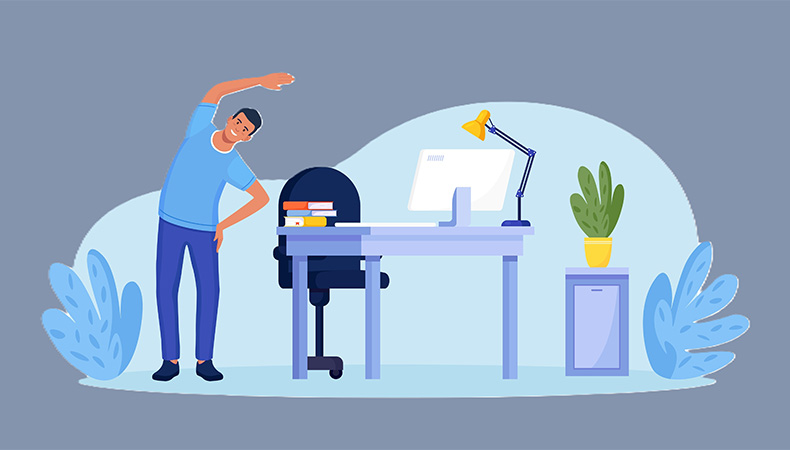
Whether you’re working from home or in an office, many desk-based roles involve sitting down for large parts of the day.
Data from Vitality Health found that the average Brit spends around seven hours per day sitting, with one in five clocking up ten or more hours sat down.
Over the course of a week, this sedentary time is adding up, with Brits spending 35 hours sitting still.
According to the research, much of this time is clocked up during working hours, with those working from home among the worst affected. In fact, 43% said that they go from bed to desk to sofa without any movement breaks.
Physical toll
If staff aren’t getting up from their desks, it’s likely that they’re not having a break from their screens or a change of scenery.
Inactive routines are also taking a physical toll. More than one-third of Brits have reported stiffness as a side effect of sitting down for too long (35%).
Others have experienced back pain (31%) or neck and shoulder pain (24%).
Separately, Vitality’s Britain’s Healthiest Workplace Report found that lost productivity due to ill-health was estimated to have cost the UK economy £860 billion between 2014 and 2023.
Britain’s Healthiest Workplace also showed a clear correlation between employees’ physical and mental health, and their health-related productivity loss over time.
For employers, this highlights the potential value of supporting employee wellbeing.
Breaking up sedentary time
Dr Yvonne Umebuani Beresford, commercial medical director at Vitality Health, said that it’s important for people to break up long bursts of sitting every 30 to 60 minutes.
“Sitting for long stretches of time can slow blood flow and increase blood pressure, which is why breaking up sedentary time with regular movement is so important,” she said.
“Building small habits, such as standing up regularly, adding short bursts of movement into the day, can make a real difference over time.”
Jonny Kibble, Vitality coach and head of exercise and physical activity also emphasises the value of “simply getting up and moving”, adding that “even a short walk can help reset your mind and body”.
How employers can help employees
For employers, encouraging employees to take regular breaks, incorporate movement into their daily routines and ensure that leaders lead by example can be a helpful starting point.
Particularly for desk-based employees, this could mean:
- Standing up every 30 to 60 minutes
- Encouraging walking meetings or 1-to-1s, where appropriate
- Promoting regular movement breaks
- Stretching between calls and virtual meetings
- Creating opportunities to step away from the desk
Whether it’s encouraging ‘walk and talks’, or providing opportunities to stretch and move in between calls, having leaders that role model these behaviours can encourage employees to follow suit.
Creating a culture where regular movement and breaks are encouraged can help to support employee wellbeing and contribute to a healthier workplace.
Supplied by REBA Associate Member, Vitality
At Vitality, we take a unique approach to insurance. As well as providing high-quality comprehensive cover, we provide a complete wellness package that can help boost employee engagement and productivity.