Why the most mature organisations treat recognition as a strategy
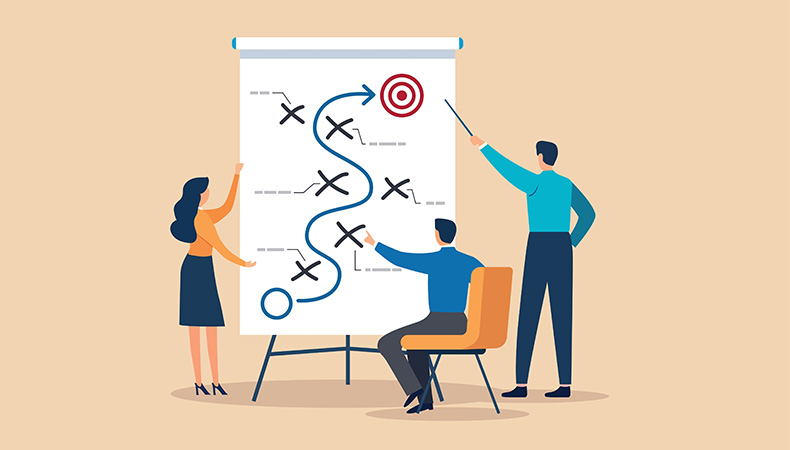
At the highest level of recognition programme maturity, there’s a fundamental change. Recognition is no longer just an initiative, a platform or even a programme owned by HR. It actually becomes a strategic asset, deeply embedded in how an organisation operates and makes decisions.
BI Worldwide’s Recognition Programme Maturity Model describes this as ‘optimised’. Rather than being defined by scale alone, it reflects a more intentional use of recognition. At this level, recognition is expected to support measurable business and financial outcomes, as well as influence culture.
In the most mature organisations, recognition touches every part of the employee lifecycle, from onboarding through to leadership development and workplace planning. It informs how leaders understand their people, how strategy is communicated and how behaviour is reinforced in real time.
So, how does this level of maturity show up day-to-day?
What recognition looks like at the optimised stage
In an optimised organisation, recognition is clearly owned by the senior leadership teams. Senior leaders don’t just run programmes, they actively model recognition behaviours, set expectations and use insight to inform decisions.
Recognition is also a fundamental part of the entire employee lifecycle. It is included in onboarding and development, and the data generated from this activity feeds directly back into the strategic planning of the business.
Managers are not only expected to recognise this, but they are also coached and rewarded for doing it well with recognition behaviours built into leadership scorecards and training programmes.
Technology also plays a huge role, but it is not the end goal. At this stage, recognition platforms are integrated with the wider employee experience, such as learning and wellbeing systems.
Insight also becomes more sophisticated. Recognition data is used to anticipate trends and shape programmes, rather than reacting solely to past engagement results.
An important factor is that participation remains high, but the focus shifts from simply driving usage to fuelling organisation-wide initiatives through the platform. Recognition becomes the driver for strategic priorities, supported by storytelling through internal communications like newsletters and digital leaderboards that reinforce impact and visibility across the organisation.
Sustaining optimisation over time
Reaching the optimised stage marks the start of a more sophisticated phase, not the end of the journey. At this level of maturity, recognition carries genuine influence, which means it must be actively maintained to continue being relevant and credible as the organisation evolves.
At the point where recognition is fully optimised, it generates rich insight, and its value lies in how effectively that insight informs leadership decisions. Rather than simply tracking participation, leaders use recognition data to understand behaviour at scale, spot emerging trends and guide strategic conversations around performance, talent and workforce planning. Recognition becomes a signal, one that helps organisations stay aligned as complexity increases.
Sustaining optimisation also depends on strong coordination and governance. Recognition now sits across leadership, people analytics, finance, IT and the wider business, so shared ownership and a common language are essential. When recognition is prioritised to the same level as other strategic investments, it continues to demonstrate obvious impact on organisational outcomes, securing its position as a trusted, long-term driver of performance.
When recognition drives measurable business impact
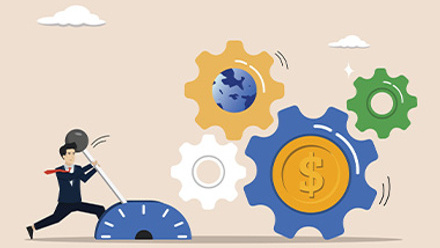
A compelling example of the optimised stage in action comes from a global medical technology company working with BI Worldwide. The organisation faced a big challenge, which was to increase free cash flow conversion from 50% to 80% within two to three years, while also strengthening employee culture and engagement.
The difficulty was that the majority of employees did not understand what free cash flow meant, let alone how their role connected or contributed to it. Free cash flow conversion refers to how much revenue is turned into cash that can be reinvested in the business, used to reduce debt or returned to shareholders.
This is where recognition came in. Using a behavioural science-led approach, the programme focused on three stages. Educating employees on strategic priorities, creating personal commitment, and recognition behaviours that drove results. Recognition and reward were integrated into training, idea-generation and commitment initiatives, explicitly linking employee actions to business results.
The impact was huge. The organisation reached its 80% free cash flow conversion goal ($5.9 billion) in just under one year, far ahead of plan. Employees aligned more closely to the business goal, engaged with role-specific commitments and contributed over 4,000 new ideas to support the strategy.
The bottom line
Organisations operating at the optimised stage understand that recognition is far more than just a tick in a HR box. It’s treated as a strategic tool that shapes how work gets done and how value is created.
Sustaining this maturity requires intent, investment and continuous evolution, but the return is significant. It leads to stronger alignment, better decision-making and a workforce that understands not just what the business is trying to achieve, but how they can personally contribute. This is recognition at its most powerful, not only as a way of showing gratitude, but as a driver of growth.
Supplied by REBA Associate Member, BI WORLDWIDE
BI WORLDWIDE is a global engagement agency delivering measurable results for clients through inspirational employee and channel reward and recognition solutions.