Why empathy-led cultures will define the next era of work
Culture rarely breaks all at once. It frays quietly in rushed conversations, delayed decisions, and the behaviours that fade as teams grow and priorities shift.
At the same time, expectations of work are changing. Employees nowadays are increasingly demanding clarity, connection and environments that support both performance and wellbeing in the workplace. This can be seen in a recent finding that employees who perceive their organisation as unempathetic are 1.5× more likely to quit within the next six months.
As a result, leaders are being asked to rethink not just how work is shaped but how it gets done.
Focusing on human experience
Many organisations still make a fundamental mistake, as they design programmes around operational need rather than human experience. While this might create efficient processes on paper, it rarely produces the emotional resonance needed to influence behaviour at scale.
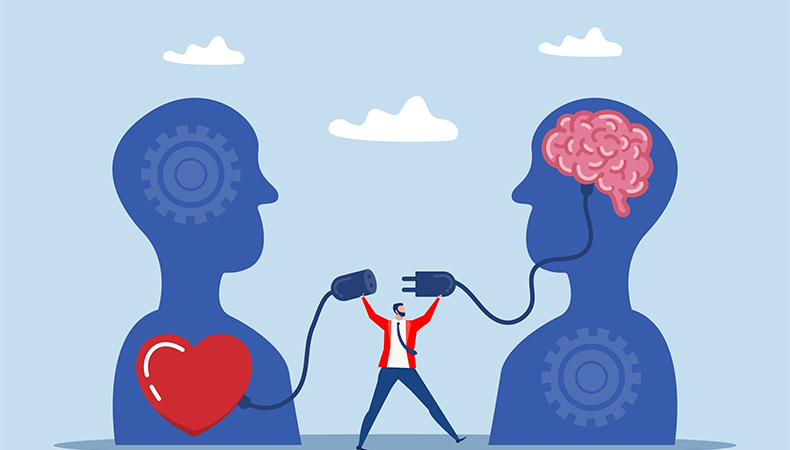
Empathy-led solution design reverses this. It starts with understanding how people actually experience work (their routines, frictions, motivations and needs) and then creates systems, rituals and tools that fit into their realities.
A systematic review of 42 studies shows that empathetic leadership is associated with better performance, improved relationships, enhanced wellbeing and stronger retention attitudes.
MIT Sloan’s 2025 agenda echoes this, emphasising that how work is designed matters just as much as what work is done when it comes to preventing burnout and encouraging contribution.
Empathy becomes a practical part of the design, not an afterthought, it becomes a way of translating insight into ways of working that people genuinely like, rather than tools they have to tolerate.
Empathy also ensures that as organisations scale, they don’t inadvertently build cultures optimised for efficiency at the expense of belonging. When employees feel understood, they adopt new processes more willingly, communicate more openly, and stay connected to their purpose even through change.
Practical model for scaling culture through empathy
Map the real employee journey, not the theoretical one
True culture design begins with understanding peoples lived experience. That means mapping the actual employee journey rather than relying on idealised charts or graphs. This involves listening closely for pain points, recognising micro-moments, and where communication or process breakdowns occur, particularly across different geographies, functions or levels.
Gallup's research shows that addressing manager realities first improves organisational impact, because managers shape most day-to-day engagement. If they are exhausted, under-supported or unclear, that disconnect cascades. Mapping the journey exposes these gaps and highlights where values are failing to translate into behaviours. It also uncovers opportunities to redesign moments that matter, including onboarding, career conversations, recognition, team socials and wellbeing.
Importantly, this type of mapping uncovers regional nuance, what motivates a team in Manchester may not resonate equally in Singapore or Berlin. When organisations design for differences rather than for a theoretical ‘average employee’, culture becomes easier to scale without becoming diluted.
Co-create solutions with behavioural and organisational expertise
Empathy-led cultures don’t emerge from top-down decisions. They come from collaboration. Co-creation blends lived experience with behavioural science, analytics and change expertise to make sure that solutions are both emotionally relevant and practical.
When employees see their insights reflected in new rituals, processes or recognition systems, then adoption increases tenfold. Co-created approaches also prevent organisations from rolling out solutions that are theoretically sound but behaviourally flawed. For example, reward or recognition tools must feel intuitive and meaningful to the people using them, and not just be aligned to organisational objectives.
Co-creation also builds trust. Inviting employees into the design process signals that leadership values their perspective, which can strengthen psychological safety. And because behavioural science helps identify the smallest signals with the biggest impact, it ensures that organisations invest in solutions that truly create momentum.
The future of culture is intentional
As organisations grow and the way we work becomes more complex, empathy-led design gives leaders a practical way to keep their culture feeling connected and genuine. It helps to ensure that the systems and processes you introduce actually evolve with your people, rather than distancing them.
During periods of change, culture can easily become scattered. But when empathy sits at the centre of how work is designed, it acts almost like an anchor. It gives people a sense of steadiness, especially when they’re navigating uncertainty, new expectations or big organisational shifts. Employees instinctively look for clarity, and empathy goes a long way in creating all three.
It also helps organisations prepare for what’s next. As AI becomes a bigger part of everyday work, empathy allows for technology to improve the human experience instead of undermining it.
The bottom line
Cultures that scale don’t happen by chance. They happen when organisations deliberately design them. Which can be easily done, when you use empathy to understand what people actually need, and use evidence to shape the behaviours and experiences that bring the culture to life. When leaders take this approach, they build environments that stay strong through growth, support wellbeing and encourage consistently high performance.
Supplied by REBA Associate Member, BI WORLDWIDE
BI WORLDWIDE is a global engagement agency delivering measurable results for clients through inspirational employee and channel reward and recognition solutions.