7 lessons from IKEA’s pay transparency journey so far

Pay transparency is high on the agenda for many reward leaders right now, and with it comes a mix of questions. How ready are we? What will we need to report? And how do we support managers to handle more open, and often more sensitive, conversations about pay?
Rather than presenting transparency as something daunting, IKEA’s approach showed how it can be built step by step: with the right foundations, clearer communication, and better support for managers.
The message wasn’t just about meeting upcoming requirements for the EU Pay Transparency Directive. Done well, pay transparency can help build trust, support employee growth, and create a more open and confident culture around reward.
The regulatory backdrop
While the EU Pay Transparency Directive, introduced in 2023, does not apply directly in the UK, it is already shaping employer conversations. The directive will introduce new requirements around pay visibility, reporting and employee rights across EU Member States by June 2026.
However, implementation won’t be uniform. Each country is translating the directive into national law at its own pace, creating a varied and evolving compliance landscape. For organisations operating across multiple markets, this complexity is accelerating a broader shift. Pay transparency has become a priority topic for UK employers, with many expecting similar standards to emerge domestically over time.
Seven takeaways from IKEA’s approach
1. Benefits: the hidden gap
One of IKEA’s key early learnings was that benefits were the least consistent, and least understood, part of their reward offering – yet they had a real impact on fairness, noting that ‘benefits is often the thing that creates the gap’. But while pay had historically been managed centrally, benefits were handled at a local level, making them harder to compare and benchmark across markets.
IKEA also recognised that employees often underestimated the value of their total reward package, meaning these gaps weren’t always visible.
As a result, IKEA has shifted its approach: treating benefits as a core part of pay, rather than a separate set of perks, and bringing them into a more consistent and transparent total reward conversation.
2. Managers, not systems, should lead conversations
One of the clearest choices IKEA made was to put managers at the centre of pay conversations. In practice, it’s managers who shape how most employees experience the organisation day to day. When questions about pay come up, that’s who they turn to.
IKEA invested in helping managers really understand how pay decisions are made, what data sits behind them, and how to explain that clearly. Just as importantly, they created space for managers to practise having these conversations.
3. A simple pay philosophy is more effective than a complex one
In contrast to highly engineered frameworks, IKEA anchored its approach in two factors:
- Competence
- Performance
This simplicity is intentional. It allows for clearer communication and reduces the risk of misinterpretation.
4. Transparency depends on explanation, not just disclosure
Making pay visible is only one part of the equation. IKEA placed equal emphasis on ensuring employees understand:
- The full value of their total reward
- The rationale behind it, and
- How they can influence future outcomes
This moves transparency beyond disclosure towards something more constructive – a shared understanding of progression.
It also addresses a persistent issue. Employees often undervalue their total reward, reinforcing the need for clearer communication.
5. Perceived fairness is driven by clarity
Transparency will inevitably highlight differences in pay. What matters is whether those differences can be explained.
By linking pay to factors such as experience, capability and role scope, IKEA focuses on making those explanations clear and actionable.
When employees understand both the rationale and the path forward, pay transparency becomes less about comparison and more about progression.
6. This isn’t only about compliance
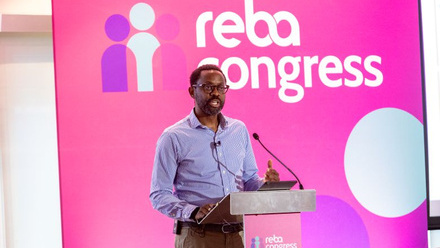
As Konstantinos Karavidas, global head of reward at Ingka Group (IKEA), put it, pay transparency isn’t something they’re doing because they have to. It’s something they believe they should be doing anyway.
Rather than treating it as a compliance exercise, IKEA has framed transparency as part of a broader goal: improving fairness and employee experience. The regulatory requirements are seen as a baseline and not the end goal.
This shift in mindset is important. It moves the conversation away from obligation and towards opportunity, particularly at a cultural level.
7. You don’t need everything fully aligned to begin
It’s easy to assume that pay transparency requires everything to be perfectly in place: aligned data, consistent structures, and clear answers across every market.
In practice, that’s rarely the starting point. IKEA acknowledged that, like most organisations, it is working with a mix of legacy decisions, local variation and evolving frameworks. Rather than trying to resolve every inconsistency upfront, the focus has been on building understanding and improving clarity over time.
A more grounded perspective
The complexity surrounding pay transparency is real, particularly for UK organisations navigating EU-driven change alongside evolving domestic expectations. But complexity does not need to translate into paralysis.
What IKEA’s approach demonstrates is that much of the work is already familiar: clarifying pay philosophy, strengthening manager capability, and communicating total reward more effectively.
In that sense, pay transparency is less a radical departure and more an extension of existing UK reward practice – albeit with greater visibility and accountability.
Access the full masterclass recording with IKEA here.
This article reflects insights shared during a recent masterclass with IKEA and is intended to highlight practical learnings from their pay transparency journey as an early adopter. It does not constitute formal advice on compliance with the EU Pay Transparency Directive, which continues to evolve and may be implemented differently across jurisdictions.
Supplied by REBA Associate Member, Benifex
The home of award-winning employee benefits, reward, recognition, & communications.