Talking about my generation? Time to change the tune

For more than a decade, generational thinking has played a visible role in benefits strategy, according to the latest research from Benifex.
Gen Z prioritises wellbeing, Millennials want purpose over pay, Boomers value pensions and security.
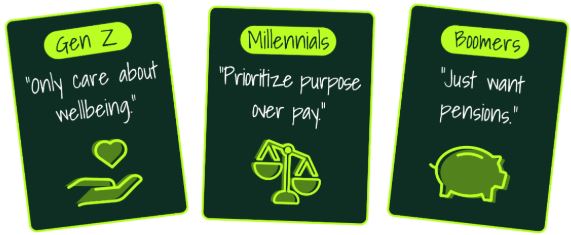
These narratives have been grounded in observable workforce trends and have often provided a helpful starting point for segmentation, planning and communication.
But over the past five years, something has shifted.
Generational categories haven’t disappeared and they’re not irrelevant. Yet they’ve become less definitive, less predictive, and less useful as the primary lens through which to design benefits. The workforce has become more complex, more fluid and more shaped by context than by cohort.
The question for HR leaders isn’t whether generational insight still has value. It does. The question is whether it should continue to lead strategy or simply inform it.
Benifex invited industry experts to weigh in on what organisations should keep, rethink, and prioritise as they move toward more mature benefits strategies.
Generational thinking still has a place – but it’s no longer the whole story
“Flexible benefits are often framed through a generational lens, but this can oversimplify what employees actually value. In reality, life stage, personal context, and individual priorities play a far greater role in shaping benefit needs," says Lyndsey Shaw, VP of partnerships at Benifex.
“As people experience different phases of life – from early career exploration to home ownership, parenting, caring responsibilities and health concerns – their priorities naturally evolve,” she says. “Because these life events occur at different times for different people, benefits strategies that assume a linear, age-based progression risk missing these nuances entirely.
“For many younger employees, flexibility is closely associated with autonomy. Digital convenience, speed and choice matter, and models such as flexible allowances can feel appealing because they allow individuals to personalise their experience and make decisions on their own terms,” explains Shaw.
“In Benifex’s latest research, we can see that Gen Z’s expectations of their employer – and their benefits – have increased more than any other age group in the last 12 months:
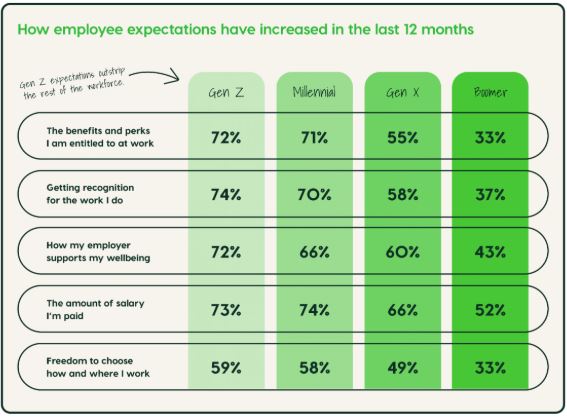
“Later in life, however, flexibility can take on a different meaning,” says Lyndsey Shaw, VP of partnerships at Benifex. “As stability, health and financial security become more central, benefits that deliver certainty and long-term value – such as private medical insurance, income protection and life assurance – often carry greater weight. In these contexts, overly open-ended models may feel misaligned with what employees need.
“For every assumed norm, there are individuals who defy it: for example, younger employees actively assess pension contributions and long-term value. Effective benefits strategies must be designed to accommodate this reality,” says Shaw.
“Flexibility only delivers value when employees understand it. Many people struggle with benefit terminology or fail to grasp the real-world relevance of products such as critical illness cover or car salary sacrifice.
“Clear, human storytelling – focused on why a benefit matters and how it could support someone at their current stage of life – is essential to removing barriers and broadening engagement.
“The future of benefits design lies in personalisation, guided choice, real-time insight and AI-enabled discovery tools that help employees make confident decisions, while giving employers clearer signals about where unmet demand is emerging,” concludes Shaw.
Technology can help employers move beyond generational assumptions
“Technology has a critical role to play in helping employers move beyond age-based thinking and deliver more relevant, personalised benefits experiences,” says Ross Spearman, chief experience officer at Benifex.
“Historically, benefits platforms functioned as places to host information, manage enrolment and support transactions. While these foundations still matter, expectations have moved on.
“Employees now expect benefits experiences to mirror the digital services they use every day – intuitive, responsive and relevant to their personal circumstances,” says Spearman. “For employers, the focus is no longer on what is offered, but on the impact those offerings deliver.
“Modern benefits technology allows organisations to design experiences around these needs and desired outcomes. Instead of asking employees to self-identify through generational labels, platforms can respond to behaviour, context, and expressed intent.
“Ultimately, what matters is timely support for real-life challenges, whether that’s managing healthcare costs, improving financial resilience, or maintaining wellbeing during a demanding period,” explains Spearman.
“Data enables this approach. Digital platforms provide real-time insight into how employees interact with benefits, where engagement drops off, and which needs are emerging across the workforce.
“Now employers can move from static, retrospective reporting to proactive intervention – adjusting communication, surfacing relevant support or redesigning experiences based on what employees actually do, rather than who they’re assumed to be,” he says.
“AI will further accelerate this evolution. Intelligent discovery and recommendation tools can help employees navigate complexity, reduce decision fatigue, and receive personalised guidance linked to life events, behaviors or stated goals.
“For HR and reward teams, this creates a continuous feedback loop, revealing unmet demand and helping to prioritise investment where it will have the greatest impact,” he says Spearman.
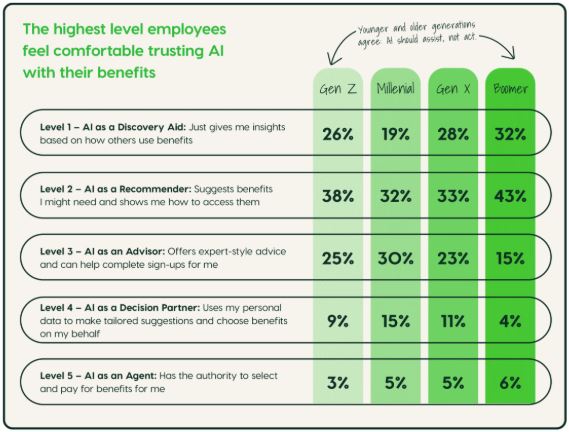
New research from Benifex shows that Gen Z and Boomer generations agree that AI should assist, not act.
“Ultimately, technology becomes the enabler of a more human benefits strategy. By supporting personalisation at scale and focusing on outcomes over demographics, it allows employers to move beyond generational tropes and design benefits that genuinely reflect the realities of modern working lives,” explains Ross Spearman, chief experience officer at Benifex.
“The goal is experiences that deliver real value – for employees and for the organisation.”
Rethinking the role of generations in benefits strategy
When benefits strategies move beyond generational assumptions and start focusing on individual needs, everyone wins.
Employees feel seen, supported, and in control; HR and reward teams gain the insight to make data-driven decisions and deliver personalisation at scale; and employers build healthier, more engaged, and more productive workforces.
Download the report: Is it time to quit the generation game in employee benefits?
Supplied by REBA Associate Member, Benifex
The home of award-winning employee benefits, reward, recognition, & communications.