AI and musculoskeletal health: Separating hype from real workplace impact
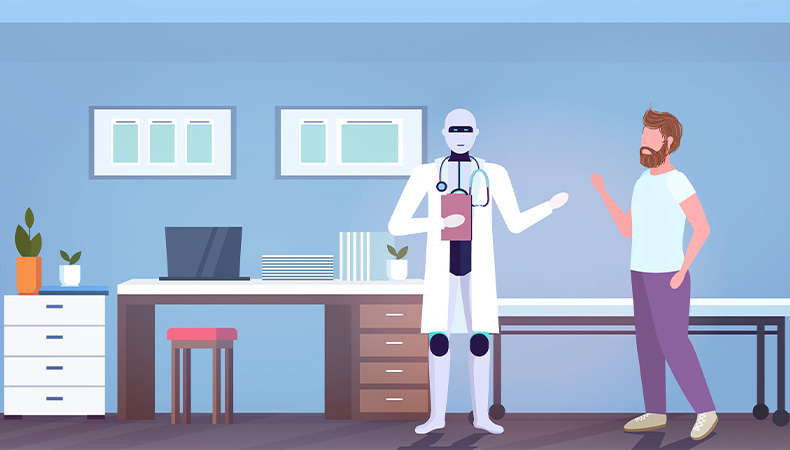
Artificial intelligence is rapidly entering workplace health - but much of the conversation is running ahead of the evidence and the regulation.
From automated coaching tools to AI-powered triage, AI is increasingly presented as a way to transform how employers manage employee wellbeing. But for HR, reward and benefits leaders, the more important question is not whether AI will shape workplace health strategies - it is how to distinguish genuine value from hype.
This topic was explored in Vitrue Health’s recent webinar, AI and MSK Health: Hype or Help?, which examined how emerging technologies may influence musculoskeletal (MSK) prevention strategies in organisations.
Where AI fits in MSK prevention
MSK conditions remain one of the leading drivers of workplace absence and healthcare costs, as well as a growing contributor to productivity loss and rising private medical claims, according to Aon.
While one in six people in the UK lives with a diagnosed MSK condition, according to Arthritis UK, 2025, as many as 64% experience MSK pain daily - highlighting a much broader and often under-recognised workforce challenge.
As a result, AI is increasingly seen as a potential solution. However, while AI can absolutely improve prevention and support, its role is often misunderstood - or worse, misconstrued. At its best, AI has the potential to fundamentally improve how organisations prevent and manage MSK risk - but only when applied in the right way.
Myth 1: AI will replace clinical expertise
One of the most common misconceptions is that AI can replace clinical decision-making within workplace health pathways.
In reality, AI augments and extends clinical capacity - it does not replace it.
It can support triage, collect structured data, and guide employees towards appropriate next steps. But MSK health is rarely straightforward. MSK pain is not purely physical - it is shaped by biological, psychological and social factors. Any AI model that ignores that complexity will fall short. This complexity also means that clinical judgement remains essential, particularly in more complex or persistent cases.
This is also reflected in regulation. Under frameworks such as the EU AI Act, systems that influence health outcomes are considered high-risk and must include meaningful human oversight. AI can support decisions - but accountability must remain human.
In practice, the most effective models combine AI-driven insights with clinical validation and governance. AI may be used to identify patterns and develop models, but outputs must be structured, explainable and consistently applied.
Myth 2: AI alone will reduce costs
Another common assumption is that introducing AI tools will automatically reduce employer health costs.
In reality, AI is the enabler not the solution itself. Cost reduction comes from the system around it: how organisations design pathways, encourage early engagement, and embed prevention into their culture.
MSK issues typically develop gradually and are influenced by how people work day to day alongside lifestyle and psychosocial factors. A purely reactive model - where support only begins once pain becomes severe - consistently drives higher long-term costs.
AI can help shift this dynamic by identifying patterns earlier and encouraging employees to engage with preventative support sooner. However, this only works when technology is embedded within a broader prevention strategy.
Vitrue Health analysed data from over 20,000 UK employees and has consistently seen that early MSK symptoms are linked to measurable productivity impacts when left unmanaged.
Myth 3: AI can diagnose MSK conditions
A third misconception is that AI can diagnose health conditions.
In reality, diagnosis remains a regulated clinical act - and that distinction matters.
AI can identify risk patterns, flag early signals, and guide individuals towards appropriate support. But diagnosis and treatment decisions require clinical expertise and carry regulatory and liability implications.
This is particularly important as employers evaluate new vendors. Tools that overstate diagnostic capability may introduce unnecessary risk, both clinically and from a governance perspective.
What good AI actually enables
When implemented correctly, AI can be one of the most powerful tools available to employers for shifting from reactive to proactive health management. In practice, this tends to fall into three areas:
- Employee risk prediction - identifying early indicators of MSK risk before they escalate into absence or claims
- Organisation-level insights - helping employers understand where risk sits across roles, teams or locations
- Scalable personalised support - delivering tailored guidance based on individual risk profiles, behaviours and context
Importantly, effective solutions reflect the complexity of MSK health. Models that ignore factors such as stress, behaviour or working patterns are likely to fall short. The most effective approaches integrate both physical and psychosocial signals to deliver meaningful outcomes.
Governance, trust and the role of regulation
As AI becomes more embedded in workplace health programmes, governance and employee trust will be critical to success.
The direction of regulation is clear. Under frameworks such as the EU AI Act, organisations deploying AI in health-related contexts must ensure systems are:
- Designed with human oversight
- Transparent enough to be understood and challenged
- Validated and monitored for performance and bias
- Supported by appropriate data governance and security controls
For employers, this shifts the conversation from “does this use AI?” to “is this safe, accountable and clinically credible?”
Employees must also feel confident that these tools are designed to support their health - not monitor their behaviour - and that their data is handled responsibly.
A realistic role for AI in workforce health
Artificial intelligence will almost certainly become a growing component of workplace health strategies over the coming years.
However, its greatest value is unlikely to come from replacing existing systems, but from strengthening them - particularly through:
- Earlier identification of risk
- More efficient access to support
- Improved access to personalised guidance at scale
For HR and reward leaders, the goal should not be adopting technology for its own sake, but understanding how it can strengthen prevention and support healthier workforces.
Supplied by REBA Associate Member, Vitrue Health
AI-powered MSK health - preventing pain before it hits claims and pathways