Experienced people are still key in an AI future

For years, employers have treated talent shortages as a recruitment problem. The assumption has been simple: if you can't find the skills you need, hire harder. This has often meant expanding the search, increasing the salary and improving the employer brand.
With 70% of tech employers struggling to fill roles and 1.4 million technology positions vacant worldwide, organisations can no longer assume they'll be able to hire their way out of a skills shortage.
Conversation shift
As AI increases demand for specialist expertise, the conversation is shifting from talent acquisition to talent retention. The question is no longer just how to attract skilled people, but how to make them want to stay.
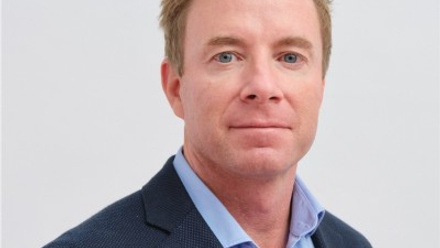
That was one of the more interesting themes to emerge from a recent Benifex webinar, The Retention Advantage, led by chief innovation officer Gethin Nadin. As organisations wrestle with AI, economic uncertainty and changing workforce expectations, retention is quietly moving from an HR concern to a business one.
According to research cited by Nadin in the webinar, around half of the 35 conditions required for successful AI adoption are cultural rather than technical. Organisations with stronger cultural foundations achieve productivity gains from AI that are up to 15 percentage points higher than average.
The obstacle isn't always the technology itself. Often, it's whether employees trust it enough to use it. "Culture isn't a soft factor in AI adoption, it's a defining one," said Nadin.
That finding becomes even more striking when you consider that 59% of employers admit their organisational culture isn't yet ready for widespread AI adoption, while 92% believe unmanaged AI deployment could create significant cultural risks over the next 12 months.
Keeping pace
For all the excitement surrounding AI, many organisations appear to recognise that the technology is moving faster than the workforce's ability to absorb it. And trust is at the heart of that challenge.
Employees don't adopt new tools simply because they're available. They adopt them when they believe those tools will help them do their jobs better – and when they trust the intentions behind them.
Trust, Nadin argued, is built long before an AI platform is launched: "If people feel supported, if they feel cared for, they're far more likely to trust what's being introduced and actually use it."
This is where benefits become more important than many employers realise. Too often, benefits are discussed as a cost centre, a recruitment tool or an employee perk. In reality, they shape how employees feel about their employer. Health support, financial wellbeing tools, family benefits and preventative care all send a message about whether an organisation is investing in its people.
That matters because the workforce itself is changing. As AI automates more routine work, specialist skills become more valuable. Many organisations are already reconsidering workforce structures and creating smaller teams responsible for higher-value work.
"Some organisations are starting to rethink the shape of their workforce," Nadin shared. "If headcount reduces, the people you do have become even more critical. This ultimately makes investment in those individuals even more important."
That presents a challenge for leaders who still think about retention primarily as an HR metric. The loss of experienced employees doesn't just create vacancies: it takes knowledge, relationships and capability out of the business. Replacing those assets is becoming increasingly difficult.
Conclusion
Every week seems to bring a new AI announcement, a new productivity claim or a new prediction about how work will change. Yet the research discussed during the webinar points to something less fashionable: the organisations getting the most from AI are often the ones paying close attention to culture, trust and employee experience.
Few leaders would argue that wellbeing, benefits and culture matter. The challenge is proving how they matter. Not as HR initiatives, but as things that influence productivity, retention and business performance.
As Nadin put it: "Value is defined by the receiver. And most CEOs right now are focused on productivity, growth and profitability, so that's the language we need to use."
That matters because the competition for talent isn't easing. With skills in short supply and specialist expertise becoming more valuable, replacing good people is becoming harder and more expensive.
The AI revolution may change the way work is organised. It may even change the size and shape of some workforces. What it won't change is the fact that talented people still have choices.
The employers that stand out over the next few years are likely to be those that give people a reason to stay.
How prepared are you for the AI challenges? Watch the webinar replay to hear the full discussion.
Supplied by REBA Associate Member, Benifex
The home of award-winning employee benefits, reward, recognition, & communications.