
The hidden cost of ignoring furry family members

Workplace benefits strategies have traditionally focused on the ‘big three’: private medical insurance, enhanced pension contributions and life insurance. For senior reward and HR professionals, these remain the backbone of long-term employee support. But the question remains: are we truly getting it right, for as many people as possible?
Modern working life has expanded the conversation, with flexible working, mental health and wellbeing now central to benefits design.
With 6 in 10 households now owning a pet, Vet-AI's survey uncovers a new trio of challenges and needs that apply to a significant share of today’s workforce.
Two-thirds say vet bill stress affects work performance
Vet bills have become alarmingly high, with outlets such as the BBC and The Guardian investigating the emotional, financial and practical distress caused by a more than 60% rise in costs between 2016 and 2023. In the UK, the average veterinary consultation costs around £60, while emergency appointments can reach approximately £260.
Vet-AI’s survey showed that 77% of respondents indicated ‘some’ or ‘significant’ stress when it came to thinking about budgeting for their cat or dog’s health, inevitably carrying those worries into the office. While this was felt across all generations, the greatest strain was reported by more experienced employees aged 35 to 64.
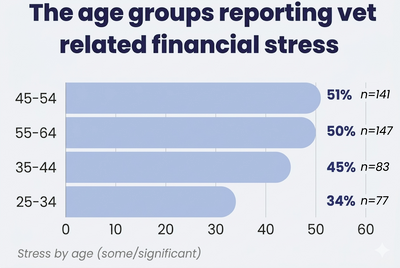
Despite these pressures, pets continue to enrich our lives, offering daily joy, companionship and social connection, which is especially important at a time when 1 in 5 adults in England are currently experiencing a mental health condition.
The PDSA (2025) also found that some owners face stark choices between heating, food and pet care, showing the lengths people will go to keep their pets.
These pressures are spilling over into daily life, creating an urgent need for alternative ways to provide pets with the care they require.
One-third took time off work to care for their pet
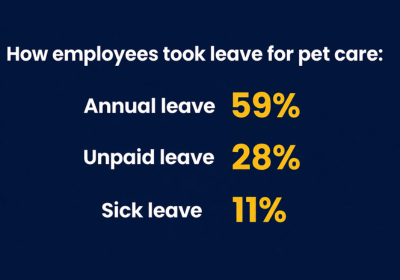
Time away from work is essential for preventing burnout, supporting mental health and sustaining productivity, but this finding suggests many employees are using their leave to manage unavoidable responsibilities, rather than for genuine rest.
Furthermore, a study of nearly 500 veterinary professionals found that more than 70% of out-of-hours emergency calls were unnecessary.
It is clear that pet owners need both better access to efficient care that can offer quick reassurance and greater confidence in managing their pets’ health.
Nearly three-quarters would be more likely to stay if their employer supported their pets’ health
Workforce retention is a critical issue in the UK, with over half of HR professionals citing it as their top challenge, driven by disengagement, burnout and more than 50% of employees considering switching their jobs for better benefits.
Vet-AI’s survey asked working pet owners how they would feel if their employer offered 24/7 access to a pet care service, such as telemedicine with video call or live chat options with a vet.
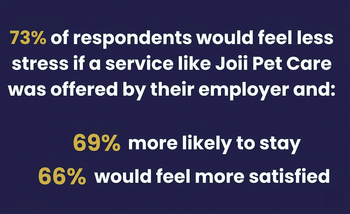
Across all ages, company sizes, and stress levels, the response was overwhelmingly positive: 69% said they would be more likely to stay with their employer, 78% felt they could save on vet bills, and 66% said they would feel more satisfied.
Covid-19 accelerated both the adoption of remote healthcare and the growth in pet ownership. It is therefore unsurprising that these trends are now converging, creating a clear opportunity for employers to support staff with online pet care solutions.
What next?
Vet-AI’s survey suggests several steps employers can take to better support working pet owners:- Survey employees to understand how many have pets and how ownership affects them financially, practically, and emotionally.
- Provide access to 24/7 remote veterinary care, ensuring providers are clinically validated and focus on preventative care to keep pets healthier from day one.
- Encourage pet-owner engagement through initiatives like ‘Pet of the Month’ campaigns in internal communications, allowing employees to submit photos and stories.
Offer ‘bring your dog to work’ days where practical, so that all employees, including non-pet owners, can benefit from the calming presence of a canine companion.
While traditional benefits remain vital, Vet-AI’s research highlights the importance of balancing long-term planning with support for employees’ everyday pressures. Veterinary care ranks among the top concerns for pet owners, making accessible and affordable options an increasingly essential part of a forward-thinking benefits strategy.
Read the full survey findings.
Supplied by REBA Associate Member, Joii Pet Care
Reducing employee absenteeism and financial stress with 24/7 online vet care.