
Are fertility benefits right for your organisation?

With the World Health Organization estimating that one in six people of reproductive age experience infertility, and LGBTQ+ employees also potentially needing support in order to form families, this is not a small-scale problem at what is often a key working age for career development.
NHS provision for fertility support is limited and, as is often publicised, variable by geography, resulting in vast differences in NHS support.
Private fertility treatment is unarguably costly, averaging £11,950 per cycle, with costs varying greatly by treatment provider.
Undergoing fertility treatment is a slow, stressful, and often extremely mentally challenging experience, which can also result in significant physical symptoms while undergoing treatment.
A 2016 study showed that 6% of employees undergoing fertility treatment left their job due to treatment. For 58%, work affected their treatment (e.g. difficulty in making appointments) and for 85%, treatment affected their work (e.g. it was difficult to concentrate).
Half of employees that responded were worried about career prospects, and 35% reported actual career impact.
The need for support is clear. The Employment Rights Bill signals the government’s intention to shift more wellbeing responsibility onto employers. And recently Labour MP Alice Macdonald presented a Bill in Parliament to make paid time off work for fertility treatment a legal requirement.
What are our options?
It is by no means a foregone conclusion that your approach should be to immediately introduce a new benefit.
Having a clear and fair fertility policy can do a lot to ensure that employees feel supported – and organisations such as Fertifa offer templates as a starting point.
Training is also key – ensure your managers are empowered with the understanding and language to be able to support their team.
Companies can also look into existing benefits to see whether there is any provision available. EAPs, for instance, can offer mental health support during treatment, and your PMI scheme may offer limited benefit. Some health cash plans also allow fertility diagnostics and consultations to be claimed.
If you are considering a fertility specific benefit, there are some key considerations:
- What is our budget, and is this the best use of it?
- Is this something that is suitable for, and wanted, by our employee demographic?
- What level of support is appropriate for us to provide as an employer? How entrenched do we want to be in our employees’ personal lives?
- Why are we considering fertility benefit and not other elective benefits, e.g. dental cover, childcare benefit, or weight loss support?
- Lifestyle factors such as nutrition, weight, exercise, mental wellbeing, smoking and alcohol, can impact fertility – should our focus instead be on addressing these factors?
If you do determine that a fertility benefit is right for your business, then there are now many more options open than were available just a few years ago, at a range of budgets and support levels.
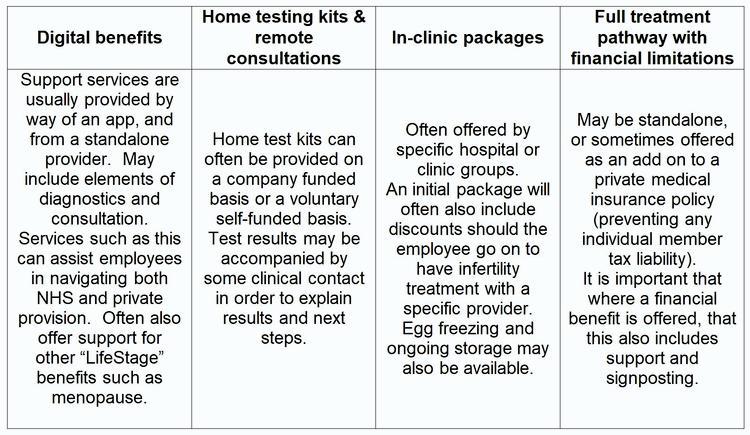
As is the case with all benefits, a thorough review of the options available is essential, and communication is key to employees feeling engaged with the benefit, and ensuring best value.
Supplied by REBA Associate Member, Gallagher
Gallagher is a global, integrated HR consulting, benefits administration & technology services provider.