
10 lessons learnt from 10 years of pay and reward

Pay transparency continues to dominate HR conversations. After ten years of helping organisations build fairer pay practices and communicate openly with employees, here are ten lessons 3R Strategy thinks matter most.
1. Pay transparency isn't about publishing salaries
When leaders first hear "pay transparency," they often picture a spreadsheet of everyone's salaries pinned to the office wall. That fear causes them to shut down the conversation before it begins.
But transparency isn't about disclosure. It's about giving employees context and clarity around how pay decisions are made: explaining your pay philosophy, your approach to benchmarking, and how progression works.
2. Trust is your most valuable asset
In any relationship, transparency demonstrates that you have nothing to hide. There's a direct link between using pay to build trust and the impact on employee engagement and loyalty. When employees trust that their pay is fair and decisions are made consistently, they're more engaged, more productive and more likely to stay.
One client reflected on their work with us: “With your involvement, we rebuilt that trust that was probably lost during the first phase of the change programme. Staff now understand how the pay and benefits are managed. It’s a clear and open policy.”
3. Fair doesn't mean equal
Fairness isn't about treating everyone identically. It means applying your principles consistently across the organisation.
Think about football. Paying your best player the same as every other player would be equal treatment, but it wouldn't be fair. His contribution is demonstrably greater, and pretending otherwise would feel deeply unfair to everyone. The same principle applies to organisations.
Consistency in how you make decisions matters more than identical outcomes.
4. Communication is 13x more important than higher salaries
Something that surprises most leaders is that research shows that communicating a fair and equitable approach to pay is 13 times more important for employee engagement than higher salaries alone.
A 1% payroll increase might sound generous, but from an employee's perspective, it could mean just £5 or £10 extra per month. Taking a fraction of that budget to benchmark salaries, calculate fair pay ranges, and train managers to have honest conversations will have far greater impact on engagement and loyalty.
5. Small organisations need this the most
When speaking to small organisations or charities, we often hear: “We're too small for this. Maybe once we get bigger, we'll think about having more structure and transparency around pay.”
But the opposite is true.
If you're an organisation with 20 employees, losing one or two people is a massive shock. And as an SME, you probably can't match larger organisations' salaries. But you can compete by demonstrating that people are treated fairly and that you communicate openly.
6. Performance needs enabling, not managing
Traditional performance management is often based on micromanagement and control. It's a relic of an era when managers felt the need to watch over employees' shoulders to ensure work got done.
Now, with remote working and distributed teams, managers need to trust people to do their jobs. And employees expect to be empowered, not controlled.
Organisations need to ditch traditional performance management and move towards a framework that builds the right environment, trust and strong relationships that enable people to excel.
This shift from performance management to enabling excellence starts with trust. The same trust built through pay transparency. And it continues through how we use the tools at our disposal. One-to-ones, for example, shouldn't be tick-box exercises where you check off objectives. They're opportunities to build relationships that help people flourish.
7. The power of partnership over consultancy
Any framework or policy is only as good as its implementation. The organisations that succeed don't just receive a new pay structure, they build understanding and buy-in across all levels, from senior leadership to line managers having conversations with their teams.
8. Invest in building knowledge
HR and reward professionals need ongoing development to keep pace with changing legislation, employee expectations, and best practice. Whether through formal training, peer networks, or self-directed learning, building expertise in this area pays dividends.
When your team understands the why behind pay decisions, they can communicate with confidence.
9. Every organisation's path is different
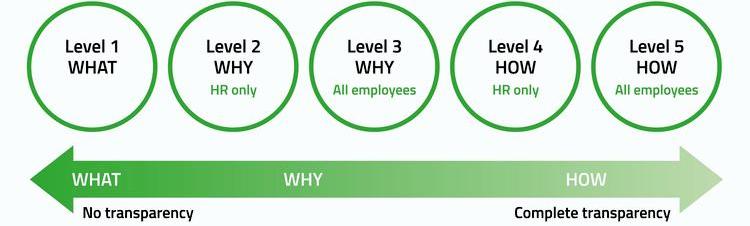
There's no single approach that works for everyone. Some organisations simply want to be transparent about how they make pay decisions. Others aspire to go further, communicating salary ranges and having open conversations about pay.
The key is understanding where you are now and where you want to end up, then building a roadmap to get there.
10. Values create lasting impact
Organisations that commit to fairness and transparency don't just implement policies - they build cultures. When your values guide every decision, you attract people who share those values. That leads to stronger teams and longer-lasting relationships.
Pay transparency isn't a compliance exercise or a trend. It's a shift in how you build trust with your people. When employees understand how pay decisions are made and trust that those decisions are consistent and fair, everybody benefits.
Supplied by REBA Associate Member, 3R Strategy
We help you attract and retain your people through a fair and equitable approach to pay and reward.