
4 tips to get to the heart of pay data

Ask a leader how they make pay decisions and you'll often hear the same answer: "I use my gut feeling."
Dig a little deeper and you'll find this gut feeling is usually informed by a quick scan of job boards and, if you’re lucky, a free salary survey from a recruitment agency. In other words, decisions affecting people's livelihoods are being made on anecdotal evidence and flawed data.
Here's the uncomfortable truth: your employee costs are probably your organisation's largest expense. Yet many organisations spending millions on salaries will actively avoid spending a few thousand pounds on meaningful data to inform those decisions.
If that sounds familiar, here are four ways to get your pay data in better order:
1. Stop trusting recruitment salary data as your primary source
That salary survey from your favourite recruiter is a useful reference point, but it has serious limitations.
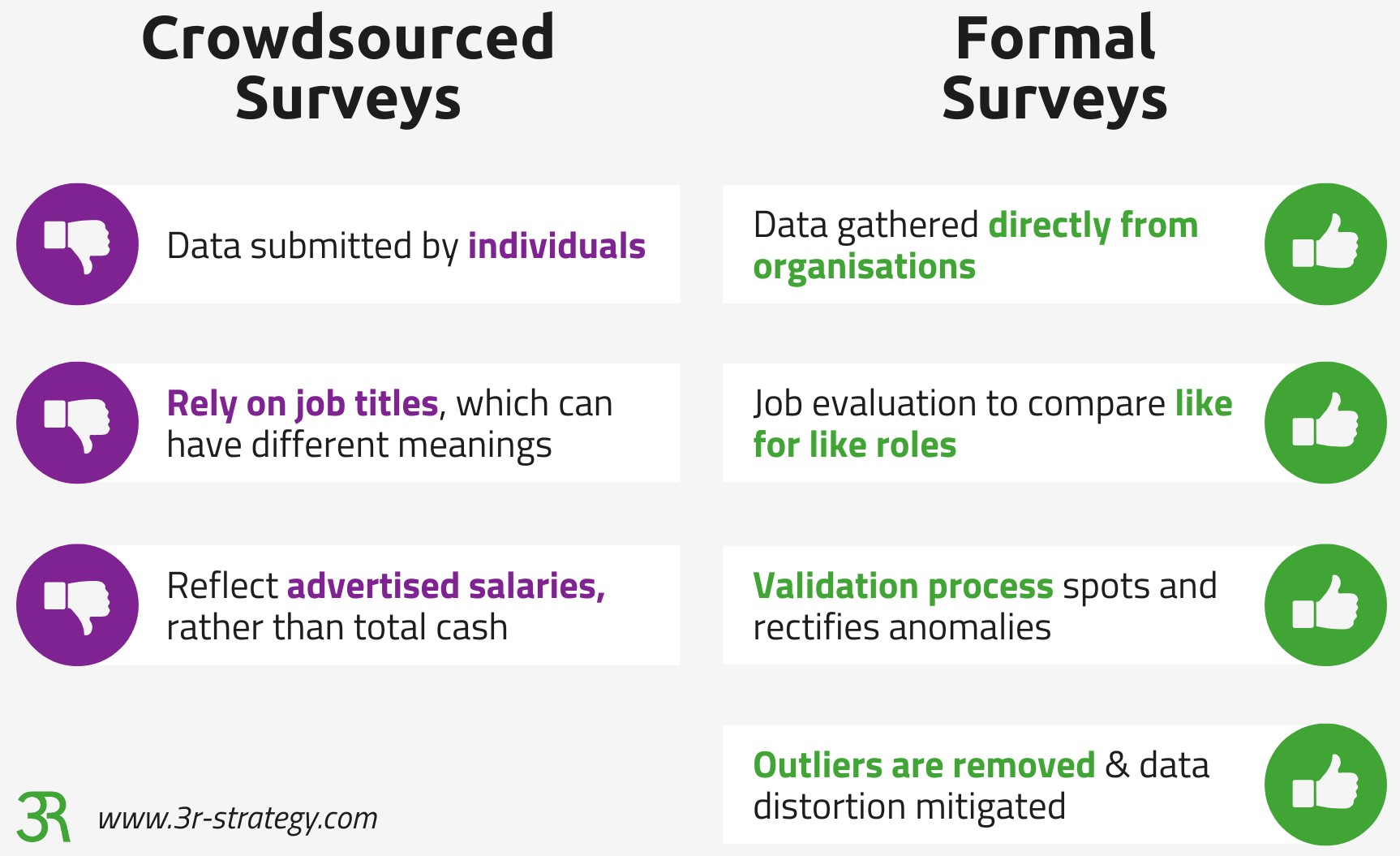
Recruitment data is almost always based on job titles, rather than the actual responsibilities of the role. Your "senior finance analyst" might be doing the same work as a "finance manager" at another.
It's also based on advertised salaries, not what candidates actually receive. A role advertised at "up to £65,000" might result in an offer of £52,000. Or occasionally, £70,000. The data simply isn't robust enough for meaningful decision-making.
2. Invest in a proper salary survey
Good salary surveys require participation rather than just payment. This ensures data integrity because every participating organisation must evaluate their roles against a common framework.
When choosing a survey, think carefully about your comparator group. Many leaders default to their direct competitors, but ask yourself: where do you actually recruit from? Your HR, finance, and IT roles could come from almost any sector. Define your market as broadly as you realistically can to ensure robust data.
And please, request your results in Excel format. You don't want to waste time transcribing data from PDF reports and introducing errors in the process.
3. Remember: rubbish in, rubbish out
Survey data is only as good as the submissions. Don't rush through your participation just to get access to the report.
Take time to properly evaluate each role based on skills and responsibilities, not just job titles. Have conversations with business leaders or review up-to-date job descriptions. Ask your survey provider for training on their job evaluation methodology.
This investment of time pays dividends. Accurate matching means accurate benchmarks, which means better pay decisions.
4. Create clear principles before you benchmark
Before diving into market data, establish your reward principles. What's your organisation's desired position relative to the market? Median? Upper quartile? Lower quartile for most roles but higher for critical technical positions?
A clear, communicated strategy builds trust with employees even when you're not the highest payer in the market. Organisations often openly position at the lower quartile during growth phases, with a commitment to improve as the business develops. Transparency about the why matters as much as the what.
No more ‘gut-feeling’
Getting pay data right isn't about finding a magic formula that removes judgement from the process. It's about making informed decisions rather than gut-feeling guesses.
Your people deserve that. And frankly, given what you're spending on salaries, so does your finance team.
Supplied by REBA Associate Member, 3R Strategy
We help you attract and retain your people through a fair and equitable approach to pay and reward.